Earn the Room.
Shortly after my own transition to Mitratech, I was tasked with the design M&A for a newly acquired product: Mineral. This project required navigating murky waters, establishing trust between my team and a skeptical set of stakeholders.
Acquisitions are disorienting for everyone involved. The team being absorbed loses the familiar. The team doing the absorbing inherits complexity they did not build and do not yet fully understand. The product sits in the middle, waiting to find out what happens next.
When Mitratech acquired Mineral, I was brought in to lead the design transition. The outgoing design team handled it with more professionalism than the situation required of them. They documented, they communicated, they handed over their work with care. I made sure we received it the same way. But the more delicate task was not the handover itself, but rather what came after.
Mineral's incoming product organisation had a complicated history with design. Their experiences had been mixed enough that trust was not something I could assume. It had to be built, one conversation at a time. I met with each product manager individually, not to present a vision or establish a process, but to listen. What did they need from a design partner? What had not worked before? What were they afraid would happen again?
What I found, underneath the understandable wariness, was a group of people who cared deeply about their product and their customers. They did not need to be convinced that design mattered. They needed to be shown that this time would be different. That meant finding the common ground between how they were used to working and how my team worked best, and building from there rather than arriving with a playbook and expecting it to be adopted.
Safe hands is not a design deliverable. It does not show up in a case study deck or a sprint review. It is the thing that makes everything else possible, the foundation of a working relationship that the final product either reflects or does not. In Mineral's case, it reflected it. But that came later.
Safe Hands.
Before you can modernise a product, you have to understand what you are actually working with. In Mineral's case, that process was illuminating in ways we had not anticipated.
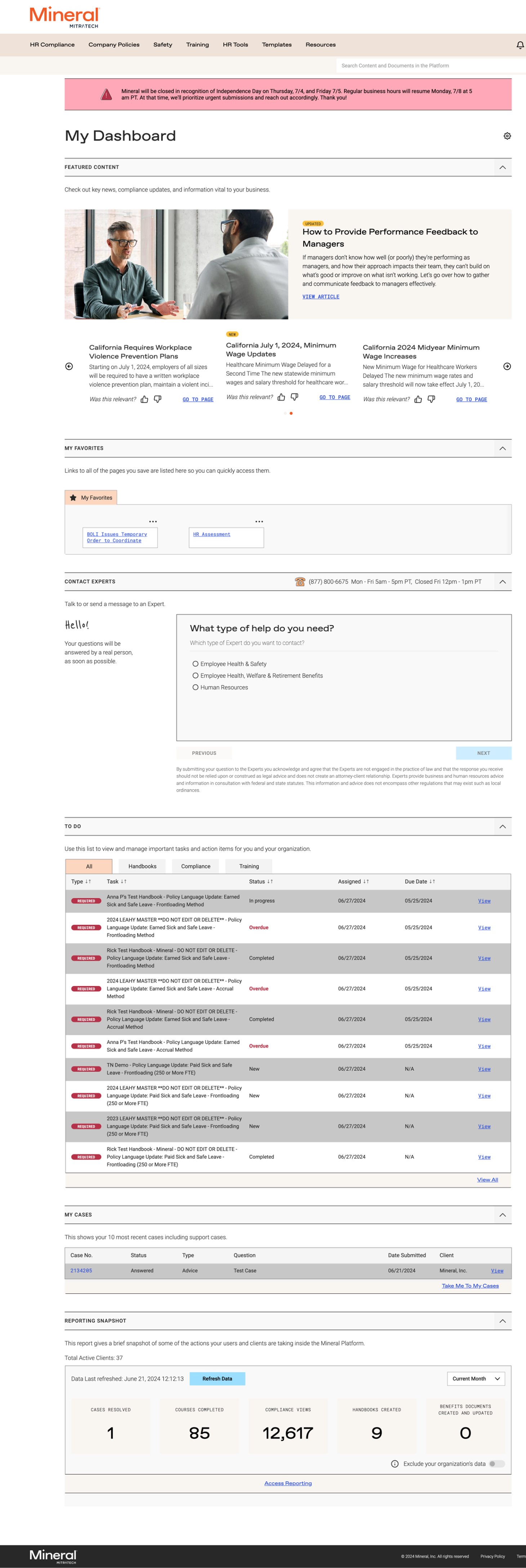
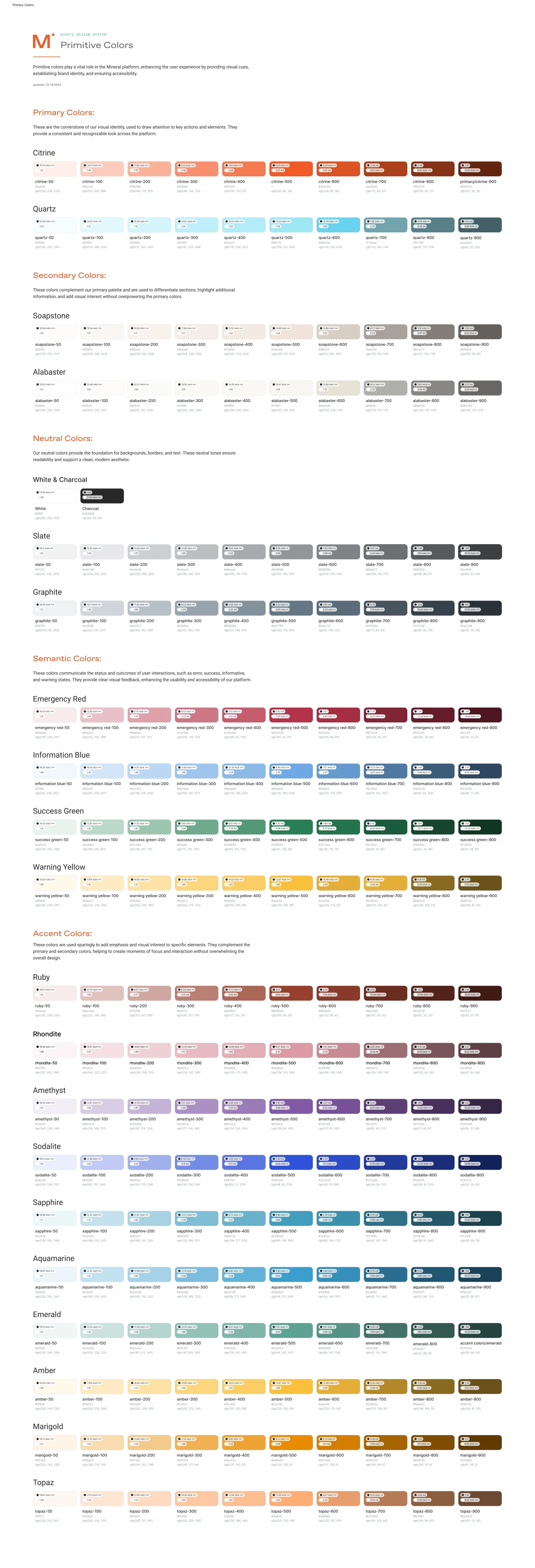
We approached the audit formally, evaluating the architecture and component library against the standards you would expect from a mature design system. What we found the outline of one. Mineral had been operating for years on the most basic of foundations, and the accumulated weight of that was visible everywhere. Components that had been deprecated but never removed. Brand colours and logos that varied across the product without clear reason. A library that had drifted so far from what was actually being built that the gap between design and development had become standard operating procedure rather than something anyone thought to fix.
It was a shock, but also clarifying. There was no point in reaching for the ambitious before the fundamental was solid. We made the decision early to build a new foundation rather than patch the existing one, something robust enough to eventually integrate with Elevate (Mitratech's broader design system) but strong enough to stand on its own in the meantime.
The partner ecosystem added a layer of complexity that shaped every decision we made. Mineral is a white-labelled product, which means that any change we introduced would ripple outward through a network of partners, each applying their own colours, their own branding, their own customisations to whatever we built. We had no direct access to the end users we were ultimately designing for. Changes had to be considered not just for how they would feel in Mineral's own skin, but for how they would hold up when that skin was removed.
Accessibility became the discipline that held everything together. A product that could be recoloured to any palette by any partner had to meet accessibility standards under every possible combination, not just the ones we controlled. That constraint, far from limiting the design, gave it rigour. We could not rely on colour to carry meaning. Every decision had to work harder and travel further than it would in a product with a fixed identity. It made the system better than it would otherwise have been.
Under the Hood.
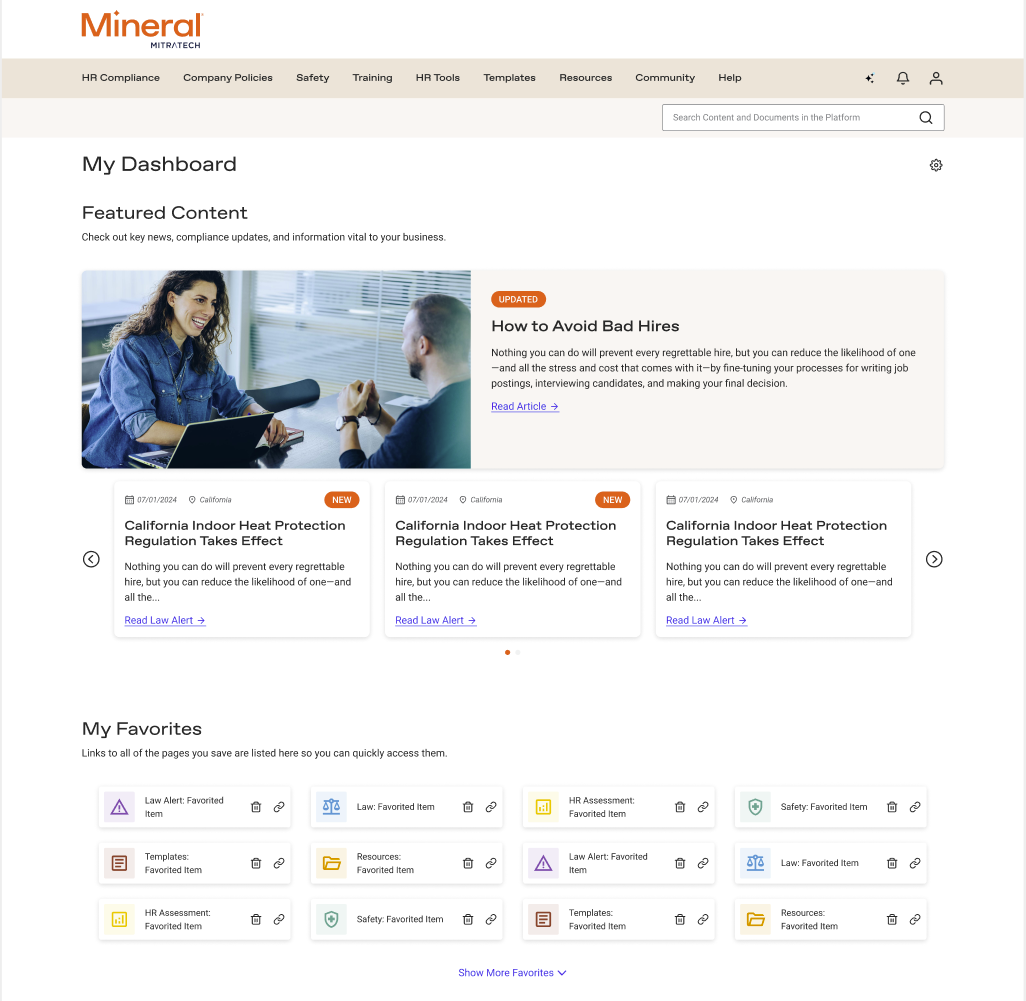
There is a particular kind of silence that falls in a room just before people react to something they were not expecting. We heard it the first time we unveiled the Mineral 2.0 concepts to the people who had built and maintained the product for years. Then came the gasps.
For many of the longtime Mineral veterans in that room, it was the first time they had seen their product imagined at its full potential. The modernisation we had pursued was not cosmetic. It was a considered reimagining of what Mineral could feel like to use, built on a foundation that could actually support it, designed with the constraints of the partner ecosystem at its core rather than as an afterthought. What they saw was something that looked like a product they could be proud of, and you could feel the shift in the room.
The response moved faster than we expected. Roadmap items that had been planned for several quarters, some for years, were set aside to fast-track the redesign. Account managers and marketing teams began showing the new designs to customers and partners almost immediately, before the product had even shipped. The reception was close to universal. People who had been skeptical about the value of design became its loudest advocates. The question stopped being whether the redesign was worth doing and became how quickly it could be delivered.
Post-launch, NPS scores climbed nearly two full points across three quarters. For a product operating at Mineral's scale, with the complexity of a partner ecosystem sitting between the design and the end user, that movement represents a meaningful shift in how customers experience the product every day.
What I am most proud of is the way we got there. The easier path would have been to arrive with conviction and impose it, to treat the acquisition as permission to start fresh without regard for what had come before. We chose differently. We listened to the outgoing team and learned from what they had built. We sat with the incoming product managers and understood what their customers actually needed. We worked with the constraints of the partner ecosystem rather than against them. The final product was better for all of it.
Earn the room. It’s a disposition, a belief that the best design outcomes come from the relationships that surround them.